Wasabi Alternative in India: The 2026 Guide to Sovereign S3 Storage
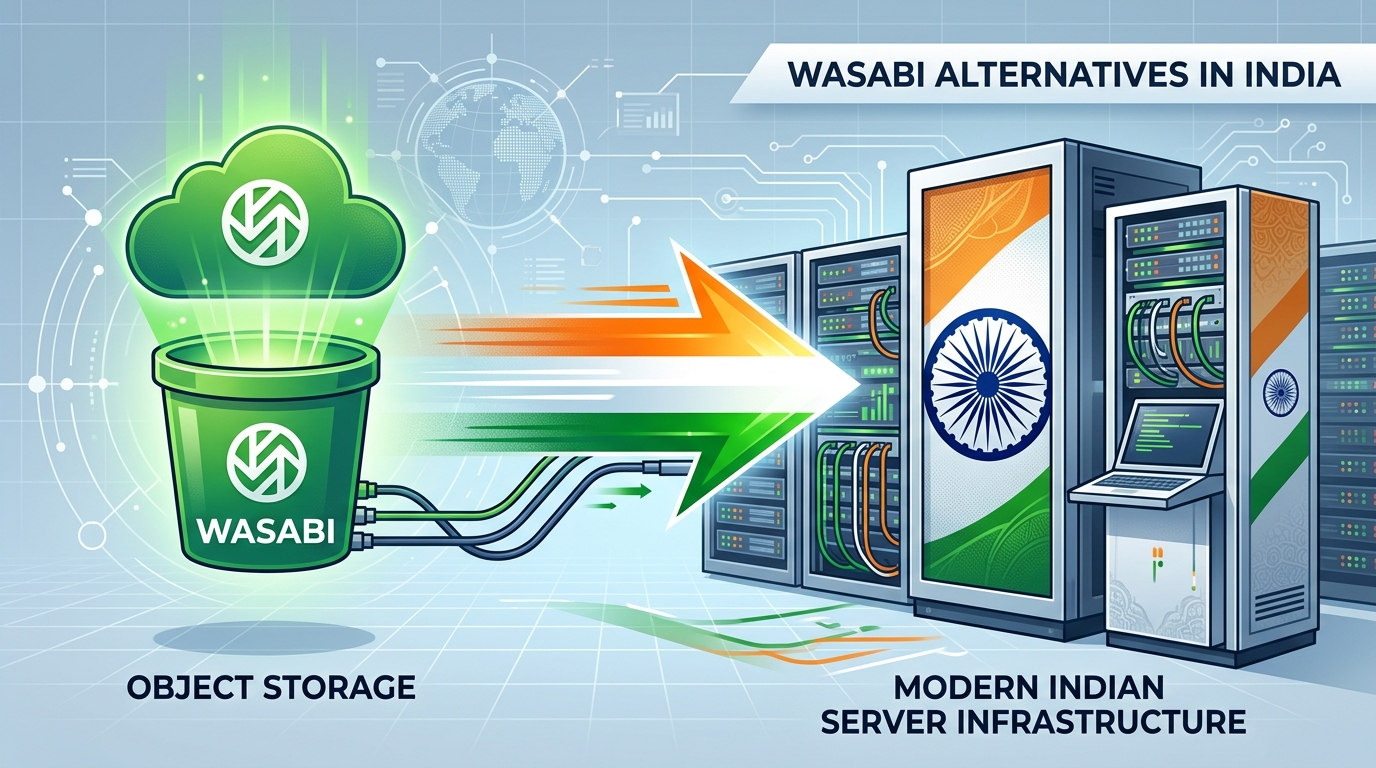
Wasabi burst onto the cloud scene with a brilliant, aggressive premise: provide Amazon S3-compatible object storage at a fraction of the cost, completely eliminating AWS’s notorious data egress (download) fees. For IT departments looking to park petabytes of backup data, Wasabi is a game-changer.
However, Wasabi is raw infrastructure, not a managed business drive. It does not have a desktop sync app, it is not built for sharing files with clients, and crucially for Indian businesses, it does not operate physical data centers in India.
If you are an Indian DevOps team, IT administrator, or design agency looking for an S3-compatible cloud that offers local Indian speeds, native background sync, and tax-compliant INR billing, here is how Wasabi compares to a sovereign Indian alternative.
1. Who is Wasabi for?
Wasabi is built strictly for IT administrators, DevOps engineers, and backup specialists. It is not a Google Drive or Dropbox competitor; it is an AWS S3 competitor. It is designed for businesses that already use enterprise backup software (like Veeam, Commvault, or MSP360) and simply need a cheap, bottomless cloud bucket to point their data toward.
2. What does it cost?
Wasabi is famous for its low baseline cost, generally around $6.99 per TB / month (approx. ₹580). However, there are two massive hidden caveats that catch small businesses off guard:
- The 1TB Minimum: Even if you only store 50GB of data, you will be billed for a full 1TB every month.
- The 90-Day Retention Penalty: Wasabi enforces a strict 90-day minimum storage policy. If your software backs up a 10GB file today, and deletes or overwrites it tomorrow, you still pay for that 10GB for the next 90 days. This makes Wasabi incredibly expensive if you are syncing highly active, constantly changing working folders.
3. Where is data stored?
Wasabi operates over a dozen data centers across the US, Europe, and the Asia-Pacific (including Tokyo, Osaka, Singapore, and Sydney). However, Wasabi does not currently operate native data centers in India. This means Indian corporate data must leave the country, creating compliance hurdles under the Digital Personal Data Protection Act (DPDPA) and exposing data to foreign jurisdiction (like the US CLOUD Act).
4. Encryption model
By default, Wasabi uses Server-Side Encryption (AES-256), meaning they hold the encryption keys. If you want true client-side Zero-Knowledge encryption, you must manually configure it yourself using third-party backup software before the data is transmitted. Wasabi does not provide an out-of-the-box, Zero-Knowledge client.
5. Backup & Sync Experience
Wasabi provides no native backup or sync applications. There is no "Wasabi Desktop Client" to silently sync your folders in the background. To use Wasabi, your IT team must manually integrate it via API using third-party software like Cyberduck, Rclone, or enterprise backup agents.
6. File Sharing
Because Wasabi is a raw object store, it is completely devoid of consumer or B2B file-sharing features. You cannot generate a branded, password-protected web link for a client to download a video file. Sharing files requires your developers to programmatically generate "pre-signed S3 URLs" via the command line or API.
7. Storage Limits
Effectively unlimited. Because it is an enterprise object storage platform, you can scale into the petabytes effortlessly.
8. India-Specific Advantages & Disadvantages
- Advantage (No Egress): If you are migrating off AWS S3, Wasabi completely eliminates the $0.09/GB egress fee, saving Indian SaaS companies thousands of dollars in bandwidth.
- Disadvantage (Latency): Because Indian data must travel to Singapore or Tokyo, API requests suffer from high network latency (60ms - 120ms+), which can bottleneck high-frequency database read/writes.
- Disadvantage (Tax & Forex): Wasabi bills in USD. Indian corporate cards incur 1.5% to 3.5% foreign transaction markups, and you cannot easily obtain an automated Indian B2B tax invoice to secure GST-compliant B2B invoices in the future.
- Disadvantage (Active Sync Costs): The 90-day retention penalty makes Wasabi financially unviable for Indian design studios or dev teams that frequently update, overwrite, or delete project files.
9. Who should choose Wasabi?
You should choose Wasabi if you are a massive enterprise running Veeam or Commvault that needs to dump hundreds of terabytes of WORM (Write Once, Read Many) archival data, and you do not care about Indian data sovereignty or the lack of a native desktop sync app.
10. Who should choose QuixiCloud?
You should choose QuixiCloud if you want the S3 compatibility and zero-egress benefits of Wasabi, but require a complete, user-friendly platform hosted strictly on Indian soil.
- Identical S3 Compatibility: QuixiCloud features an industry-standard S3-compatible API. Point your Rclone scripts, MinIO clients, and server cron jobs to QuixiCloud just as easily as you would to Wasabi.
- No 90-Day Retention Traps: QuixiCloud does not penalize you for deleting or overwriting your own data. You are free to run active background syncs without accumulating phantom storage charges.
- Native Desktop Sync & File Sharing: Unlike Wasabi, QuixiCloud includes a lightweight desktop sync engine for Windows, Mac, and Linux, plus a web console to generate password-protected, self-destructing links for client deliverables.
- Sub-5ms Indian Server Speeds: QuixiCloud operates on Tier-1 ZFS infrastructure in Mumbai, Delhi, and Bangalore. Your database backups and heavy media files sync over local domestic networks with near-zero latency.
- Native INR Billing: Skip the USD forex fees. QuixiCloud bills locally via Razorpay in INR, providing automated B2B tax invoices so your finance team can instantly support GST-compliant B2B invoicing.
Stop Paying USD for Foreign Object Storage
Get S3-compatible storage with native desktop sync, zero egress fees, and sub-5ms local Indian latency.
Start Your Free QuixiCloud Trial — Deploy on Mumbai, Delhi, and Bangalore servers today. GST-compliant B2B invoicing coming soon.
Explore More: QuixiCloud Plans · Secure Cloud Storage
Written by QuixiCloud Team
The QuixiCloud India Engineering Team is dedicated to building secure, scalable, and privacy-first cloud storage solutions tailored for Indian businesses and users.