pCloud Alternative in India: The 2026 Guide to Privacy & Local Performance
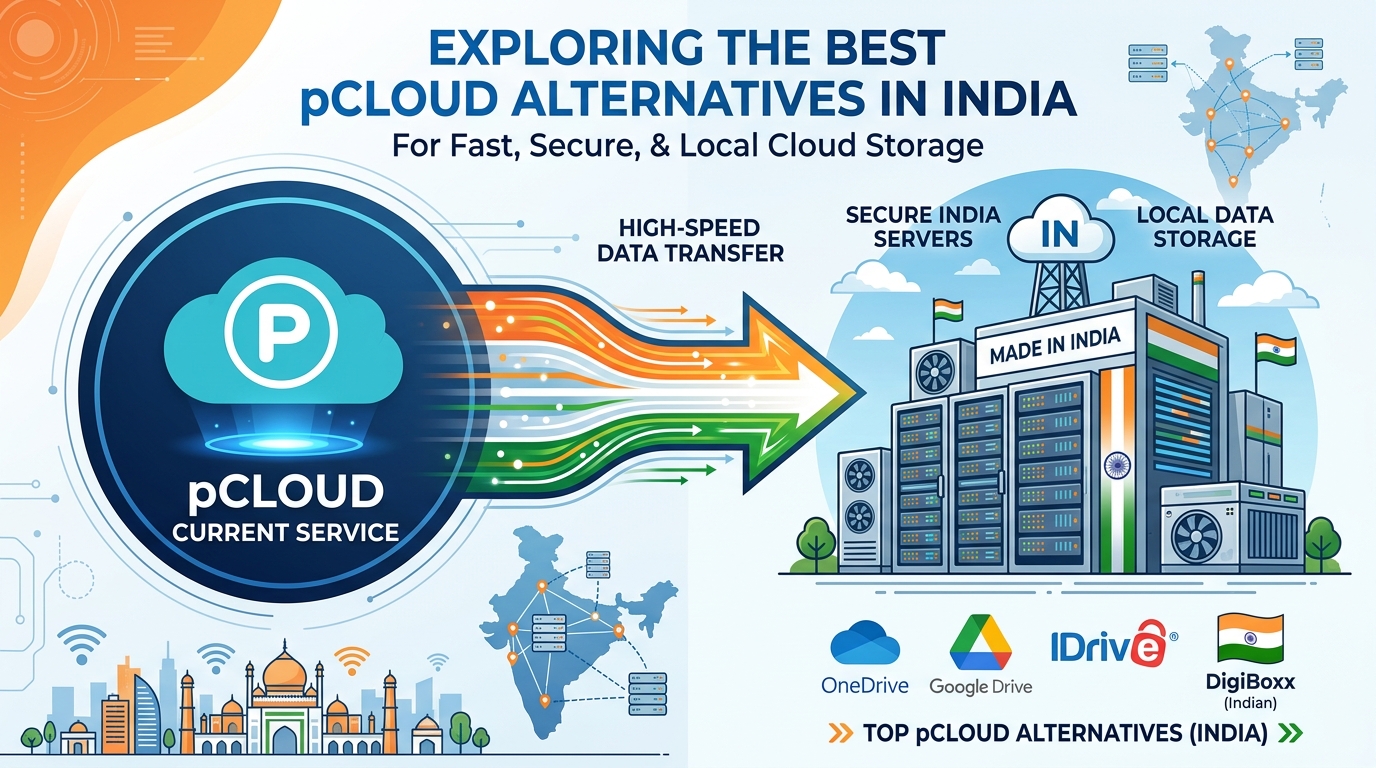
pCloud has built a strong reputation globally by marketing two highly appealing features: Swiss data privacy laws and "lifetime" storage plans. For individual users tired of monthly subscription fatigue, paying once for a virtual cloud drive is an attractive proposition.
However, when Indian professionals, design agencies, and IT teams evaluate pCloud for daily commercial operations, the cracks in the offering begin to show. The lack of Indian data centers leads to sluggish file transfers across international subsea cables. Furthermore, true zero-knowledge encryption—the core pillar of modern data privacy—is locked behind an expensive, separate add-on fee.
If you are an Indian business or professional looking for a sovereign cloud drive that delivers native privacy without the latency and foreign currency hurdles, here is an objective breakdown of pCloud versus domestic alternatives.
1. Who is pCloud for?
pCloud is primarily designed for individual consumers and freelancers who want to escape the monthly SaaS subscription treadmill. Its core product, pCloud Drive, acts as a virtual drive on your computer, allowing users to offload personal files, music libraries, and media archives to the cloud to free up local hard drive space.
2. What does it cost?
pCloud is famous for its "Lifetime" pricing model.
- A 2TB Lifetime plan typically costs around $399 (approx. ₹33,500) as a one-time payment.
- The Hidden Catch (pCloud Crypto): pCloud heavily markets its "military-grade privacy," but standard plans do not include client-side zero-knowledge encryption. To encrypt your files so that pCloud cannot read them, you must purchase the "pCloud Crypto" add-on, which costs an additional $150 (approx. ₹12,600) for a lifetime pass, or requires a separate monthly fee.
3. Where is data stored?
When you create a pCloud account, you must choose one of two data regions: Dallas, Texas (USA) or Luxembourg (European Union). pCloud does not have physical data center infrastructure in India.
4. Encryption model
By default, pCloud uses Server-Side Encryption, meaning they hold the decryption keys and can technically access your files. To get true client-side Zero-Knowledge encryption, you are forced to pay for the proprietary "pCloud Crypto" folder. Even then, only files placed specifically inside that single Crypto folder are zero-knowledge encrypted; the rest of your drive remains server-side encrypted.
5. Backup & Sync Experience
pCloud excels at creating a "virtual drive" that mounts like a physical USB stick on your computer, saving local SSD space. However, when it comes to synchronizing heavy, actively used working folders (like video rendering directories or code repositories), relying on a virtual drive connected to a server 7,000 kilometers away often results in file-locking issues and sluggish background sync.
6. File Sharing
File sharing is a strong suit for pCloud. It offers public links, upload requests, and custom branding for links. However, if you share a file from inside your paid "pCloud Crypto" folder, sharing capabilities are heavily restricted because the platform cannot decrypt the file to generate a standard web preview.
7. Storage Limits
pCloud offers strict volume tiers (typically 500GB, 2TB, or 10TB). They do not enforce strict single-file size limits, making it suitable for uploading large continuous media files—provided your internet connection can sustain the long upload times to the US or EU.
8. India-Specific Advantages & Disadvantages
- Advantage: Choosing the Luxembourg (EU) region provides protection under Swiss and EU privacy laws (GDPR), which is preferable to US jurisdiction.
- Disadvantage (Severe Latency): Without Indian servers, every file you open, save, or sync must travel across international routing nodes. For Indian users, this translates to high ping times (150ms+) and slow Time to First Byte (TTFB), severely degrading the performance of heavy business workloads.
- Disadvantage (Tax & Forex): pCloud bills in USD or EUR. Indian businesses face 1.5% to 3.5% credit card forex markups and receive international receipts that cannot be used to secure GST-compliant B2B invoices in the future.
9. Who should choose pCloud?
You should choose pCloud if you are an individual consumer looking to make a one-time financial investment in a "lifetime" cloud locker for personal photos, casual backups, and music, and you do not mind slower international upload/download speeds.
10. Who should choose QuixiCloud?
You should choose QuixiCloud if you are an Indian professional, agency, or business that cannot compromise on workflow speed, native privacy, and tax compliance.
- Sub-5ms Indian Server Speeds: QuixiCloud operates strictly on Tier-1 infrastructure in Mumbai, Delhi, and Bangalore. Heavy CAD files, raw video footage, and database backups sync instantly over local domestic networks, completely eliminating the international lag of pCloud.
- Zero-Knowledge Included (No Extra Fees): Unlike pCloud, which charges a premium for "Crypto," QuixiCloud enforces client-side AES-256 encryption across your entire sovereign vault by default. Your private keys never leave your machine.
- Enterprise ZFS Architecture: QuixiCloud actively protects your corporate assets against silent disk degradation (bit rot) with continuous cryptographic checksumming—an enterprise safeguard not found in standard consumer virtual drives.
- Native INR Billing: Billed in stable Indian Rupees via local gateways like Razorpay. QuixiCloud provides automated B2B tax invoices, allowing your finance team to instantly secure future B2B GST tax invoices and cut operational overhead.
Stop Waiting on International File Transfers
Experience the speed of local ZFS infrastructure combined with true, out-of-the-box Zero-Knowledge encryption.
Start Your Free QuixiCloud Trial — Deploy on Mumbai, Delhi, and Bangalore servers today. GST-compliant B2B invoicing coming soon.
Explore More: QuixiCloud Plans · Secure Cloud Storage
Written by QuixiCloud Team
The QuixiCloud India Engineering Team is dedicated to building secure, scalable, and privacy-first cloud storage solutions tailored for Indian businesses and users.